
So, you’ve explored the rich cultural tapestry of Java, perhaps marvelled at Borobudur, or hiked the majestic volcanoes like Bromo or Ijen. What’s next on your Indonesian adventure? For many, the answer is the island paradise of Bali! If you’re considering an overland journey, this Java to Bali Travel Guide: Ferry Crossing & Best Overland Routes is exactly what you need. Traveling from Java to Bali by land and sea isn’t just a commute; it’s an integral part of the adventure, offering incredible scenery and a deeper connection to the country.
Forget expensive flights for a moment; the overland route from Java to Bali is an experience in itself. It’s a chance to witness the stunning landscapes transition from volcanic peaks and lush rice paddies to the sparkling blue waters of the Bali Strait. Plus, it’s often a more budget-friendly and environmentally conscious choice. Ready to dive into the details? Let’s get you from Java’s heart to Bali’s embrace!
Why Choose the Overland Journey to Bali?
You might be thinking, “Isn’t flying just easier?” And sure, it can be quicker. But opting for the overland route offers so much more than just getting from point A to point B. It’s about the journey itself!
- Scenic Beauty: Traveling by train or bus across Java allows you to soak in incredible vistas you’d miss from 30,000 feet. Think terraced rice fields, active volcanoes, and charming villages.
- Cultural Immersion: You’ll interact more with locals, see everyday life unfold, and get a better feel for Indonesia beyond the tourist hotspots.
- Budget-Friendly: Generally, overland travel is significantly cheaper than flying, leaving more rupiah for delicious food or extra activities.
- Adventure Factor: There’s a certain thrill in navigating different modes of transport, making new friends, and embracing the unexpected.
- Flexibility: You can stop along the way, explore hidden gems, and truly tailor your trip.
It’s a fantastic way to extend your adventure, rather than just hitting pause between destinations.
Related Article: Prambanan Temple Tour
Overview of the Java to Bali Overland Journey
The core of the overland journey from Java to Bali revolves around reaching the easternmost tip of Java, specifically Ketapang Port in Banyuwangi. From here, a short but crucial ferry ride takes you across the Bali Strait to Gilimanuk Port on Bali’s western coast. Once you land in Gilimanuk, it’s onward travel to your final destination like Denpasar, Ubud, Kuta, or Seminyak.
Most travelers coming from Central or East Java (think Yogyakarta, Surabaya) will head towards Banyuwangi. The route often incorporates visits to iconic spots like Mount Bromo and Ijen Crater, making the journey an epic multi-day exploration rather than just transit.
Related Article: Yogyakarta Culture
Key Overland Routes from Java to Bali
Depending on where you start in Java and what you want to see, there are a few popular ways to approach this journey. We’ll focus on the most common and rewarding options.
The Classic Route: Via Probolinggo (Mount Bromo) & Banyuwangi (Ijen Crater)
This is by far the most popular and recommended route, especially if you want to experience some of Java’s incredible natural wonders before hitting the beaches of Bali. Many people combine their Java to Bali travel guide plans with a visit to Mount Bromo and Ijen Crater.
Starting from Yogyakarta:
If you’re beginning your adventure in cultural hub Yogyakarta, here’s a common itinerary:
- Yogyakarta to Probolinggo/Cemoro Lawang (for Mount Bromo):
The most comfortable option is taking a train from Yogyakarta to Probolinggo. The journey can take around 8-10 hours, offering scenic views. From Probolinggo, you’ll arrange a minivan or local transport to Cemoro Lawang, the village closest to Bromo. Many tour operators offer packages that include transport, Bromo sunrise, and then onward travel. - Probolinggo/Bromo to Banyuwangi (for Ijen Crater):
After your magical Bromo sunrise, you can take a bus or arrange a private transfer from Probolinggo back to Probolinggo train station, or directly to Banyuwangi. If you’re going for Ijen, you’ll head towards Banyuwangi town (or one of the closer accommodations to Ijen). This leg can be another 6-8 hours by bus or private car.
Starting from Surabaya:
Surabaya is often the gateway for those flying into East Java. The route is similar, just a shorter initial leg:
- Surabaya to Probolinggo/Cemoro Lawang (for Mount Bromo):
Trains run regularly from Surabaya to Probolinggo (around 2-3 hours). Buses are also an option. From Probolinggo, arrange local transport to Cemoro Lawang. - Probolinggo/Bromo to Banyuwangi (for Ijen Crater):
Similar to the Yogyakarta route, after Bromo, head towards Banyuwangi by bus, train (from Probolinggo to Banyuwangi), or private transfer.
Banyuwangi itself is a bustling town and the perfect base for exploring Ijen Crater. You can do the Ijen blue flame trek overnight or a sunrise hike before heading to the ferry port.
Direct Route: Just to the Ferry
If you’re pressed for time or have already seen Bromo and Ijen, you can head directly to Banyuwangi’s Ketapang Port from any major city in Java. This usually involves:
- Train: Take a direct train to Banyuwangi Kota station. From Yogyakarta, this is a long but comfortable journey (around 12-14 hours). From Surabaya, it’s significantly shorter (around 6-7 hours).
- Bus: Long-distance buses connect most major Javanese cities to Banyuwangi. This can be more economical but often takes longer due to traffic and stops.
Related Article: How to Respect Local Miners at Ijen Crater Safely
The Ferry Crossing: Ketapang (Java) to Gilimanuk (Bali)
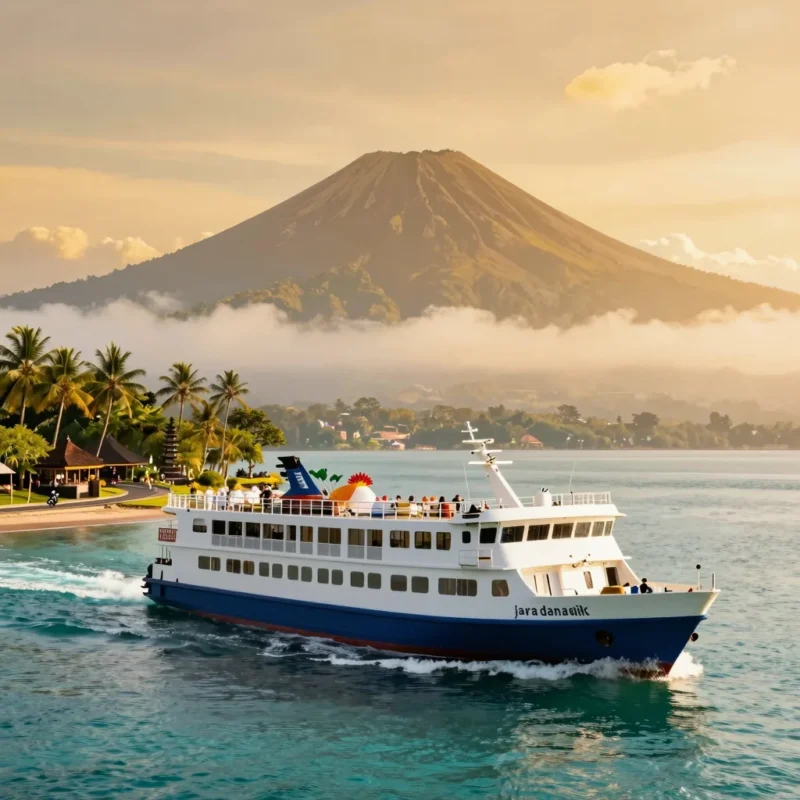
This is the final, pivotal leg of your Java to Bali overland journey. The ferry crossing is generally straightforward and frequent.
Getting to Ketapang Port
If you’re in Banyuwangi town, getting to Ketapang Port is easy. It’s a short taxi, ‘becak’ (cycle rickshaw), or Grab/GoJek ride away. If you arrive by train at Banyuwangi Kota station, the port is also just a few kilometers away.
The Ferry Experience
- Frequency: Ferries run 24 hours a day, roughly every 20-30 minutes. You won’t have to wait long!
- Duration: The actual crossing itself is relatively quick, usually taking about 45-60 minutes. However, boarding and disembarking can add to the total time.
- Cost: It’s incredibly cheap! A passenger ticket typically costs less than IDR 10,000 (about $0.70 USD). If you’re bringing a motorbike or car, the cost is naturally higher.
- Types of Ferries: These are primarily car and passenger ferries. Don’t expect a luxury cruise, but they are perfectly functional and offer basic seating, sometimes with small snack stalls.
- Boarding: Simply walk up to the ticket counter, buy your ticket, and head to the designated boarding area.
The views during the crossing, especially at sunrise or sunset, can be quite lovely, with Java receding behind you and Bali beckoning ahead.
Arrival in Gilimanuk, Bali
Once your ferry docks in Gilimanuk, you’ve officially made it to Bali! Gilimanuk is a small port town on Bali’s western tip. There isn’t much to see or do here, so most travelers quickly arrange onward transport to their final destination.
Related Article: How to Get to Madakaripura Waterfall Bromo
Onward Travel from Gilimanuk to Your Bali Destination
From Gilimanuk, you have several options to reach popular spots like Denpasar, Ubud, Kuta, Seminyak, or Canggu. Knowing these options is key to a smooth Bali travel from Java experience.
- Public Buses: Immediately outside Gilimanuk port, you’ll find buses heading to Denpasar’s Ubung Bus Terminal. From there, you can catch smaller local buses or taxis to your specific area. This is the most budget-friendly option.
- Shared Minivans/Shuttles: Many touts will approach you offering shared minivans directly to popular tourist areas. Haggle for a good price! These can be convenient as they often drop you closer to your accommodation, but they might wait until full.
- Taxis/Ride-Hailing Apps: Official taxis are available, but be prepared to negotiate. Ride-hailing apps like Grab and GoJek operate in Bali, but sometimes face restrictions or higher prices in specific tourist zones or immediately at the port. It’s worth checking, but sometimes private drivers offer competitive rates.
- Private Drivers: You can pre-book a private driver or arrange one on arrival. This is the most comfortable and direct option, especially if you’re traveling with luggage or a group, though it’s also the most expensive.
- Motorbike Rental: If you’ve brought your own motorbike on the ferry, you’re free to ride directly. If you need to rent one, it’s better to do so in the main tourist areas rather than Gilimanuk.
The journey from Gilimanuk to places like Ubud or Kuta can take anywhere from 3-5 hours, depending on traffic and your chosen mode of transport.
Modes of Transport for the Java Leg
How you cover the vast distances in Java greatly impacts your comfort and experience.
Train Travel
Trains are a fantastic option in Java. They are generally:
- Comfortable: Especially executive class, offering reclining seats, air conditioning, and sometimes food service.
- Scenic: Many routes pass through stunning landscapes.
- Reliable: Less prone to traffic delays than buses.
- Booking: Book tickets in advance online (e.g., via tiket.com or Traveloka) or at the station, especially for popular routes and executive class.
This is often the preferred choice for long distances like Yogyakarta to Banyuwangi.
Bus Travel
Buses are the backbone of Indonesian public transport and are often the most economical choice:
- Extensive Network: You can get almost anywhere by bus.
- Economical: Significantly cheaper than trains or private cars.
- Variety: From basic economy buses to more comfortable executive coaches with AC and reclining seats.
- Drawbacks: Can be slower due to traffic, frequent stops, and less legroom.
Great for shorter hops or if you’re on a tight budget.
Private Car/Driver
For ultimate flexibility and comfort, especially if traveling in a group:
- Convenience: Door-to-door service, stops whenever you want.
- Flexibility: Set your own itinerary and pace.
- Cost: More expensive, but can be cost-effective for groups.
- Booking: Arrange through your accommodation, local travel agencies, or online.
This is a popular option for multi-day tours that include Bromo and Ijen, where the driver handles all the logistics from pickup in Yogyakarta/Surabaya to drop-off at Ketapang Port.
Motorbike
For the truly adventurous, riding a motorbike across Java to Bali offers unparalleled freedom:
- Freedom: Go anywhere, anytime.
- Adventure: An epic road trip experience.
- Logistics: You can take motorbikes on the Ketapang-Gilimanuk ferry.
- Considerations: Requires significant riding experience, good planning, and awareness of Indonesian road rules (or lack thereof!). Ensure you have appropriate licenses and insurance.
Tips for a Smooth Java to Bali Overland Journey
To make your adventure as seamless as possible, keep these pointers in mind:
- Book Train Tickets in Advance: Especially for executive class and during peak season, popular train routes sell out quickly.
- Pack Smart: You’ll be carrying your luggage on and off various modes of transport. Pack light and efficiently.
- Stay Hydrated: Indonesia is hot and humid! Always carry water.
- Learn Basic Indonesian Phrases: Even a few simple greetings and questions can go a long way in making interactions smoother and more pleasant. “Terima kasih” (thank you) is always a winner!
- Be Aware of Travel Times: Distances in Java are vast. Factor in plenty of travel time and potential delays.
- Budget Wisely: While generally cheaper than flying, factor in costs for food, accommodation, and potential unplanned stops.
- Safety First: Keep an eye on your belongings, especially in crowded bus or train stations. Always trust your gut instinct.
- Embrace the Journey: Things might not always go exactly as planned, but that’s part of the adventure! Stay flexible and enjoy the ride.
Conclusion
Embarking on a Java to Bali overland journey is more than just transportation; it’s an unforgettable part of your Indonesian adventure. From the ancient temples of Central Java to the dramatic volcanic landscapes of East Java, and finally, the short but symbolic ferry crossing to Bali, every step offers new sights, sounds, and experiences. By choosing the overland route, you’re not just saving money; you’re gaining stories, insights, and a deeper appreciation for this incredible country. So, pack your bags, prepare for some stunning scenery, and get ready for an epic journey from the heart of Java to the shores of Bali. Happy travels!

